PROJECT

NARRATIVE NONFICTION PODCAST THAT WEAVES TOGETHER THE LIFE OF THE FAMOUS ITALIAN SOPRANO AMELITA GALLI-CURCI, MY OWN FAMILY'S STORY, AND THE HISTORY OF SOUND DEVICES OVER THE LAST HUNDRED YEARS.


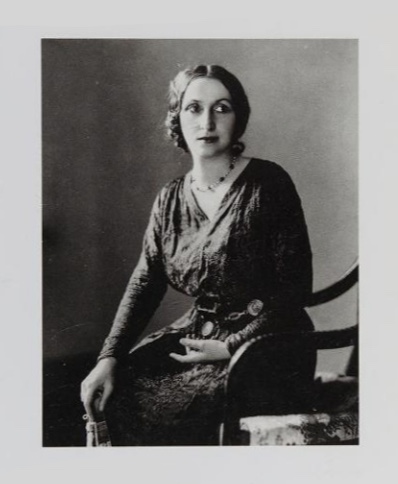
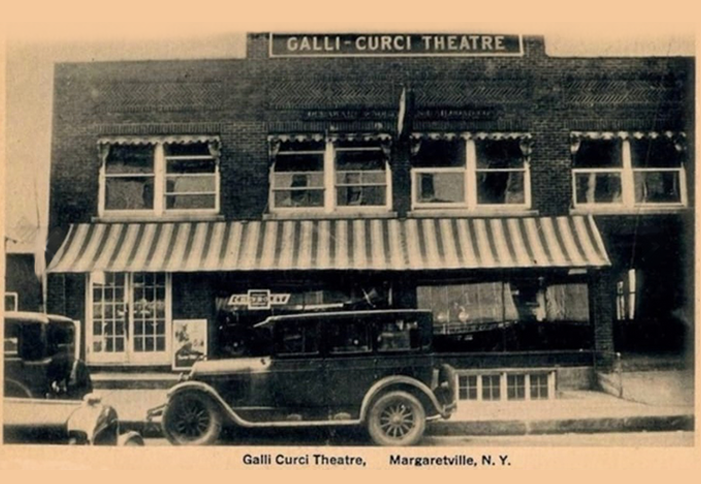
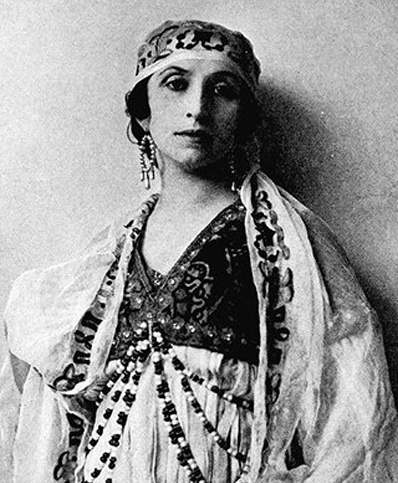
At home, we always spoke of the renowned soprano Amelita Galli-Curci (1882–1963), the Italian-born sister of my great-grandfather Enrico — el Nonino — and aunt of my beloved maternal grandmother Amelita Galli, named in her honor and known to everyone as "Lita". As soon as I began to look into this aunt's past, I was able to find some information: in the early 1900s, following an economic collapse suffered by Amelita's father — my great-great-grandfather — he and his children traveled to Argentina to seek their fortune, while she and her mother remained in their native Italy. A disciplined piano student and entirely self-taught singer, Amelita auditioned for the first time — with overwhelming success — in the role of Gilda in the small Italian town of Triani. From that moment on, she never stopped growing as a lyric singer, performing on the most prestigious operatic stages in the world, being engaged by the Chicago Opera and later by the Metropolitan Opera in New York. She made her way in the world of opera, reaching its highest heights. Amelita came to Argentina very few times; one of those visits was in August 1915, when she performed at the Teatro Colón, before returning to the United States, where she lived at the time and would spend her final years.

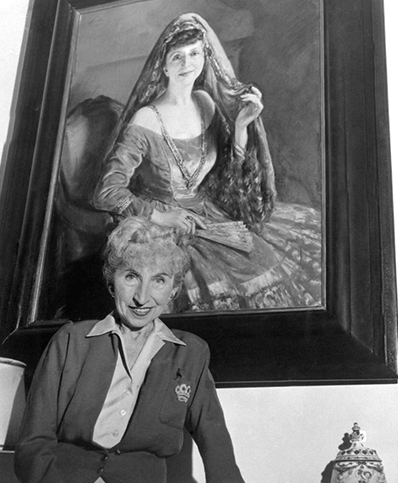
Until now, I never knew whether anyone in my family had actually met her during any of these visits. Family stories about ancestors often echo through generations as little more than folklore, and I knew virtually nothing about Amelita's life — despite the fact that my own mother Silvia (82) always admired her deeply, proudly keeping her memory alive as a source of family pride. She used to have a large portrait of her hanging in the dining room. My grandmother Lita, who passed away in 2016 at the age of 99, also spoke of her aunt with fervent admiration.

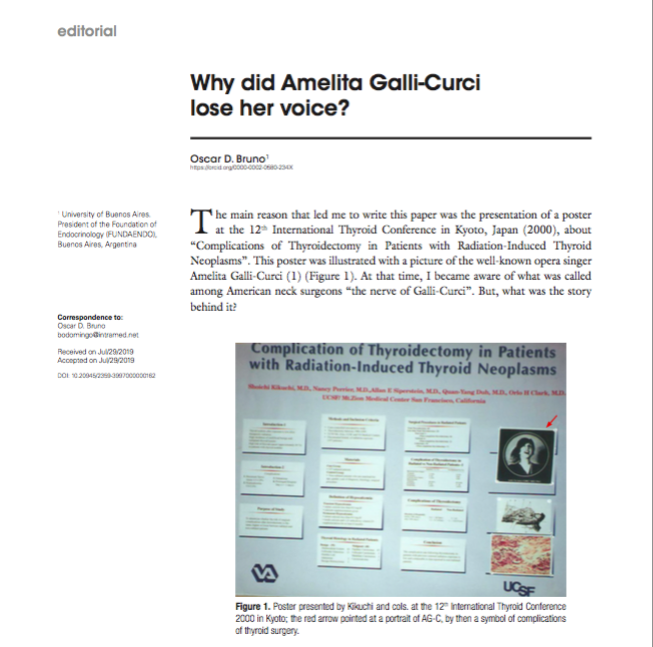
This story never interested me much — until one day, searching through my emails for some trace of my father, who had passed away just a few months earlier, I came across an email from him containing an attachment. It was an article written in English for an American journal, in which my father — a renowned endocrinologist — analyzed Amelita's illness: a thyroid nodule the size of a tennis ball lodged in her neck. The title of the article was: "Why Did Amelita Lose Her Voice?" It was dated 2019, just three years before my father's death.


LAURA BRUNO

EPISODES 

EPISODE 1 "Shadow song"

Laura travels with her son, Germán, to the town of La Cumbre in Córdoba, Argentina, to visit Tati, a cousin of her mother's whom she hasn't seen in twenty years. The trip leads Laura to reflect on a celebrated family figure: her great-great-aunt Amelita Galli-Curci, an opera diva from the 1920s. Through family accounts and archival material, including an interview with Amelita herself, the episode narrates the singer's origins and her rise to fame, connecting Laura's personal journey with the singer's story through family history, musical talent, and legacy.

EPISODE 2 "Nightingale"

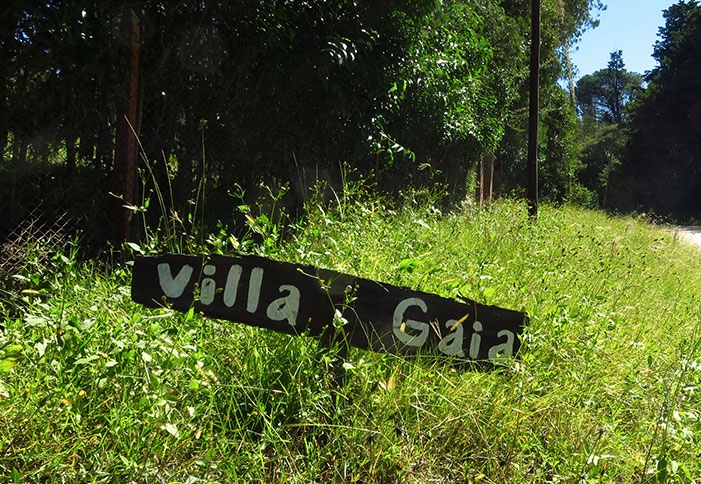
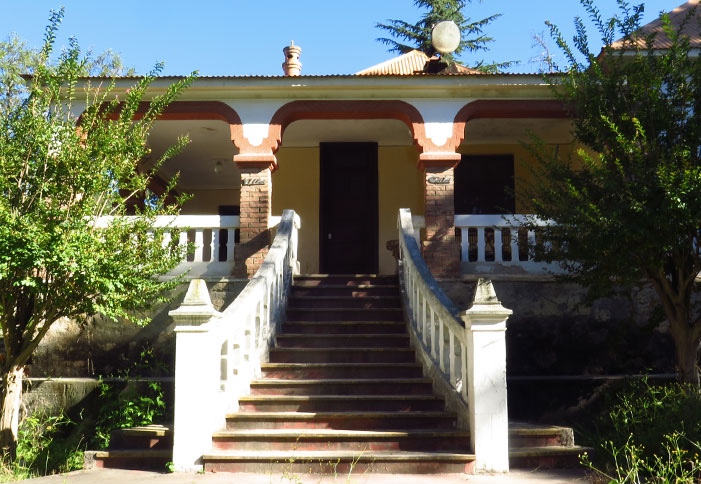
The episode focuses on the character of Gilda from Verdi's opera Rigoletto, one of Galli-Curci's most acclaimed performances. ELSA ALIBONI a psychologist and mezzo-soprano, describes the complexity of Gilda's character, from her innocence to her love and sacrifice. The aria "Caro Nome" and Amelita's skill in interpreting it are analyzed. Additionally, Laura explores family history through player piano rolls found in the old Galli family vacation home, "Villa Gaia." PABLO CHIMENTI a musician and sound artist, explains how these rolls work and their connection to the music of Amelita's era. The episode also highlights Amelita's impact on contemporary critics and the public's passion for her singing, showcasing her exceptional charisma and talent.

EPISODE 3 “His master voice”

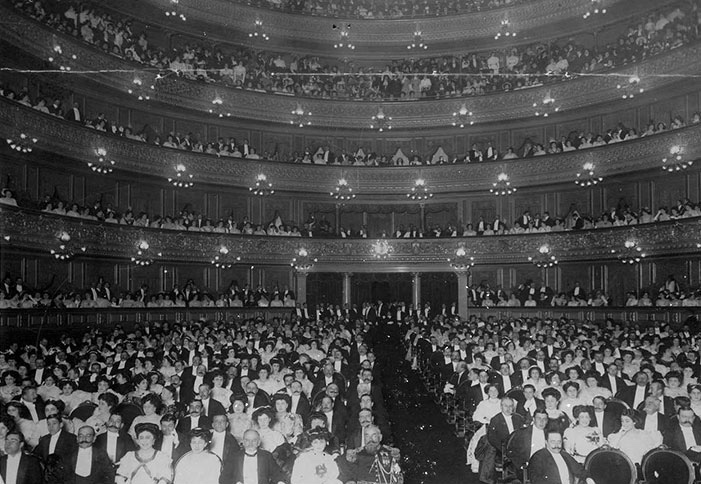
At the National Library, Laura searches through period newspapers for reviews of Amelita's performances in Buenos Aires during her 1912 and 1915 tours. That last season proved crucial for the diva: she arrives in Argentina having survived typhus in Spain, where, still barely able to stand, she sang from the stage in a wheelchair and was given a standing ovation by the audience and the Spanish royal family. In Buenos Aires, she shares the stage with Enrico Caruso in a production of Lucia di Lammermoor at the Teatro Colón. MARGARITA POLINI, cultural manager and journalist specializing in classical music, explains why that opera and its celebrated mad scene define a type of female heroine that defined an entire era. When the tour ends, the war prevents a return to Italy and Amelita triangulates her journey via the United States, where she makes her debut at the Chicago Opera to overwhelming success. She signs with the Victor Talking Machine Company record label on the same terms as Caruso, and her voice — intimate and perfectly suited to the recording medium — turns her into a bestseller. JORGE DI LELLO, from the Teatro Colón Foundation, describes her as a "recording diva," while NICOLÁS VARCHAUSKY, composer and sound artist, traces the chain of devices that stretches from the original phonograph all the way to Spotify.

EPISODE 4 "Decade of Glory"

The episode opens at the conservatory where Germán, Laura's son, is performing in a school choir presentation. From there, the story travels to New York, where Amelita's career reaches its most dazzling height. PETER CLARK, archivist and press director at the Metropolitan Opera House for over forty years, recalls how as a child he would listen to Galli-Curci's records on his grandmother's turntable, and how her unmistakable, velvety voice was recognized in every American home. Following Caruso's death in 1920, the Met seeks a figure capable of anchoring the opening night of the following season and chooses Amelita to sing La Traviata, a role that demands almost three distinct registers. MARGARITA POLINI explains the complexity of Violeta, the protagonist of La Traviata — a heroine who sacrifices her only love to protect her beloved's family honor. JORGE DI LELO recalls that performing at the Colón was the diploma, but the Metropolitan was the mecca: Amelita's debut on the theater's opening night is an absolute triumph. By now she is a true Prima Donna on the international circuit, having achieved extraordinary popularity — and, unusually for the era, commanding higher fees than her male colleagues. The purity, lightness and clarity of her voice, combined with complete technical mastery and a naturally charismatic stage presence, bring Amelita to the pinnacle of her artistic career. At the height of her fame, her marriage to Luigi collapses when Amelita falls in love with her pianist, Homer Samuels. She divorces, marries him on January 15, 1921, and on that very same day becomes an American citizen. She never returned to Italy.

EPISODE 5: Why Did Amelita Lose Her Voice?

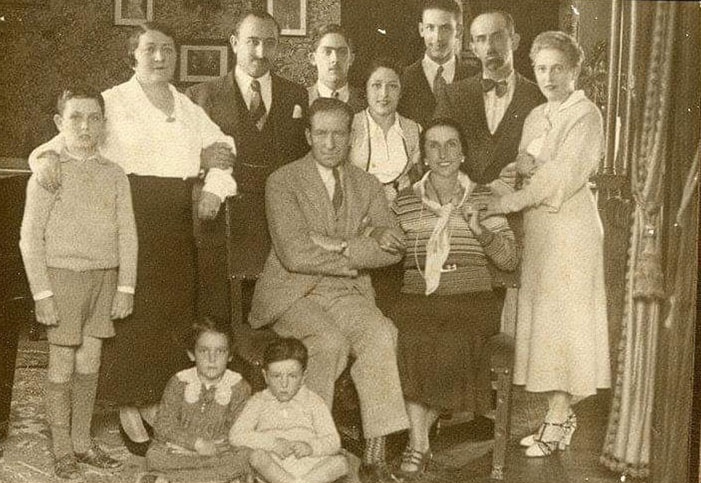
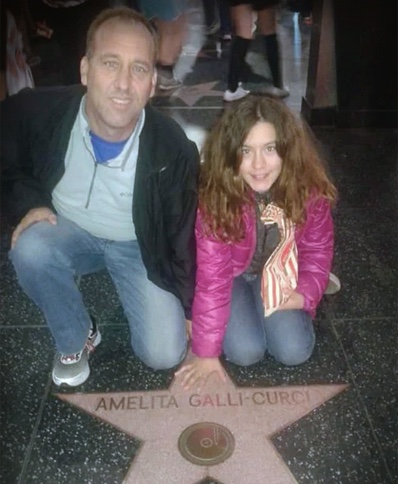
Laura's father, Dr. Oscar Bruno, a renowned endocrinologist who passed away in 2022, published a scientific article setting out his personal hypothesis on the reasons why Amelita lost her voice. His colleague, Dr. LEONARDO RIZZO, endocrinologist at the Hospital de Clínicas in Buenos Aires, explains the diagnosis: Amelita had a goiter weighing 184 grams — nine times the normal size of a thyroid gland — that had been growing silently for fifteen years, displacing her trachea and affecting her superior laryngeal nerve. MARGARITA POLINI describes what it means for a singer to live with that uncertainty about her own voice. The growth in Amelita's neck had become large enough to leave ever less room for her breathing and her singing, leading the soprano to decide to undergo surgery to avoid an early retirement from the operatic stage. But before she even knew she would need the operation, in 1934 she travels to Rosario to visit her brother Enrico and the whole Galli family. From that encounter a sepia photograph survives, which Laura examines in detail. QUIQUE GALLI, LEO GALLI and PABLO GALLI, Laura's uncles and cousins, reconstruct the story of great-grandfather Enrico — his character, his fortune, his legacy — and the memories that have circulated in the family about that visit and about the soprano. The operation, performed in Chicago in 1935 under local anesthesia — while Amelita coughs, makes sounds and even sings a passage from The Barber of Seville to help the surgeons gauge the tension in her vocal cords — is both a medical and a media event. Yet after the operation, her voice is no longer the same. Her return to the Chicago Opera in 1936 is met with lukewarm praise. That splendid voice of another era now only faintly hints at its former brilliance as it fades away. Amelita has no choice but to accept that she can no longer sing. Years later, Hollywood awards her a star on the Walk of Fame in the recording category.

EPISODE 6 "Goodbye, Diva"

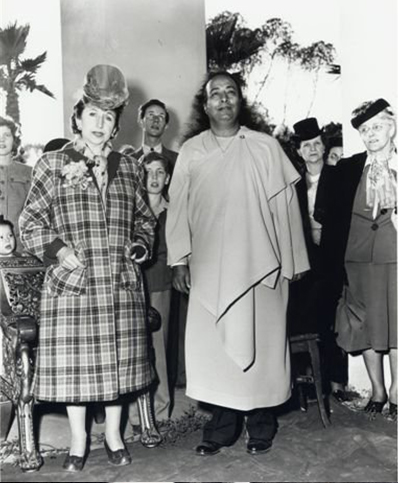
Following her failed comeback in Chicago and the definitive loss of her singing voice, Amelita withdraws from public life of her own accord and settles in southern California, far from the stages and the spotlight. With this new horizon before her, Amelita devotes all her time to painting, singing behind closed doors, and reading the books of Daisetz Suzuki on Zen Buddhism. She finds solace in spirituality: the teachings of the Hindu guru and pioneer of yoga in the West, Paramahansa Yogananda — whom she had met in 1927 — will accompany her until the end of her life. GABRIEL FIGINI, specialist in martial arts and bioenergetic training, explains what it means to embrace a philosophy like Kriya Yoga at that stage of life. LUISINA RAMPOLDI, psychologist and astrologer, analyzes Amelita's birth chart and draws a portrait of her character: intense, self-assertive, with a profound solitude at her emotional core and a wound bound up with the figures of her father and siblings. Laura also explores the figure of uncle Pepín, brother of both Amelita and great-grandfather Enrico — an amateur astronomer, musician and musicologist who maintained a rich epistolary exchange with her. In 1934, on her last visit to Rosario, Amelita arrives with a trunk full of her opera costumes — Gilda, Lucia, Violeta, Rosina — which becomes a dazzling secret for the young nieces. Amelita dies of pulmonary emphysema on November 26, 1963, in La Jolla, California, at the age of 81. The news makes headlines just four days after the assassination of JFK. Her will holds one final surprise for the family.

EPILOGUE: "Witness"

We are in the newsroom of the newspaper El Nacional. It is August 1915, just days after Amelita's performance alongside Caruso at the Teatro Colón. A journalist interviews her and she responds with the candor and character that define her: she admires Dante Alighieri, supports Italy's entry into the war, and prefers having money to not having it — though she declares she does not make art for money. Her greatest joy, she says, is the applause of the audience. What does one live for, she is asked. To dream, she answers. Laura reflects on what remains of Amelita today: her voice recorded on hundreds of discs, a single audio interview, and no living witness who ever heard her sing in a theater. NICOLÁS VARCHAUSKY closes the podcast with the question that has run through the entire narrative — about memory, sound, and time


Amelita and  Paramahansa Yogananda, Washington DC, 1927

BIO

The Galli family tree begins in Milan, Italy, where young Amelita enthusiastically embraced the musical education of her time, learning to play the piano. Amelita's early life took an unexpected turn when her father's business went bankrupt, forcing him to travel to Argentina with his sons to rebuild their fortune, while Amelita and her mother remained in Europe.

A pesar de las dificultades económicas, la pasión de Amelita por la música perdura. Perfecciona sus habilidades vocales de forma autodidacta y a fines de 1906 consigue su primer contrato operístico en Roma y desde entonces comienza sus presentaciones y giras por todo el mundo. En 1908 se casa con el marqués Luigi Curci, y añade el apellido de su marido al suyo. Se divorciaron en 1921 y Galli-Curci se volvió a casar con Homer Samuels, su acompañante en piano. En 1915 cantó dos funciones de “Lucia di Lammermoor” con Enrico Caruso en Buenos Aires. Llegó a los Estados Unidos en el año 1916. Estaba planificada una corta estancia, pero el gran éxito que recogió por su interpretación de la Gilda de Rigoletto  fue tan extraordinario que aceptó permanecer como integrante de la Chicago Opera Company. Formó parte de esta compañía hasta 1924. 

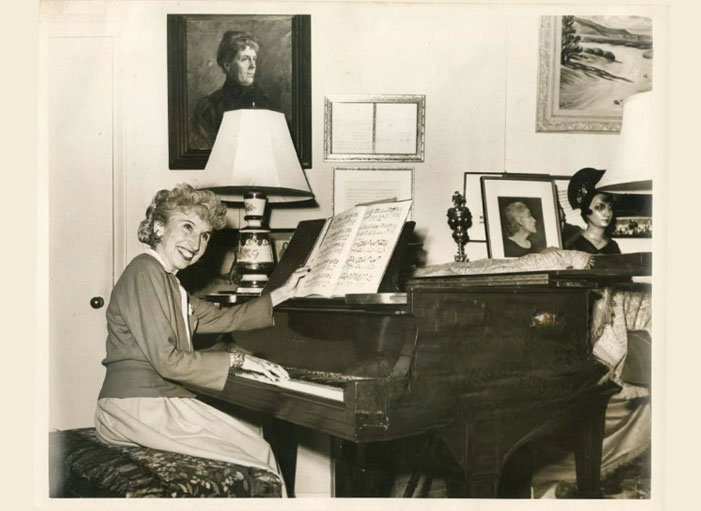
Amelita se convirtió en una diva norteamericana. Firmó un contrato con la compañía discográfica Victor Talking Machine Company (RCA) y en 1921 Galli-Curci se unió al Metropolitan Opera de Nueva York para permanecer hasta su retiro de la escena, en 1930. Había padecido problemas de garganta durante muchos años, hasta que en 1935 tuvo que ser sometida a cirugía para extraer un nódulo. El año siguiente regresó a los escenarios como Mimi de La Bohème en Chicago. Por desgracia, se hizo evidente que sus años de cantante se habían agotado. Después de unos cuantos recitales, se retiró definitivamente y se trasladó a vivir a California, donde asistió al Self Realization Fellowship, a devotee of her Buddhist master Paramahansa Yogananda. She  She lived there until her death in November 1963, at the age of 81.

GALLERY
EN